

Understanding 5G Exposure: Insights from the CLUE-H Research Cluster
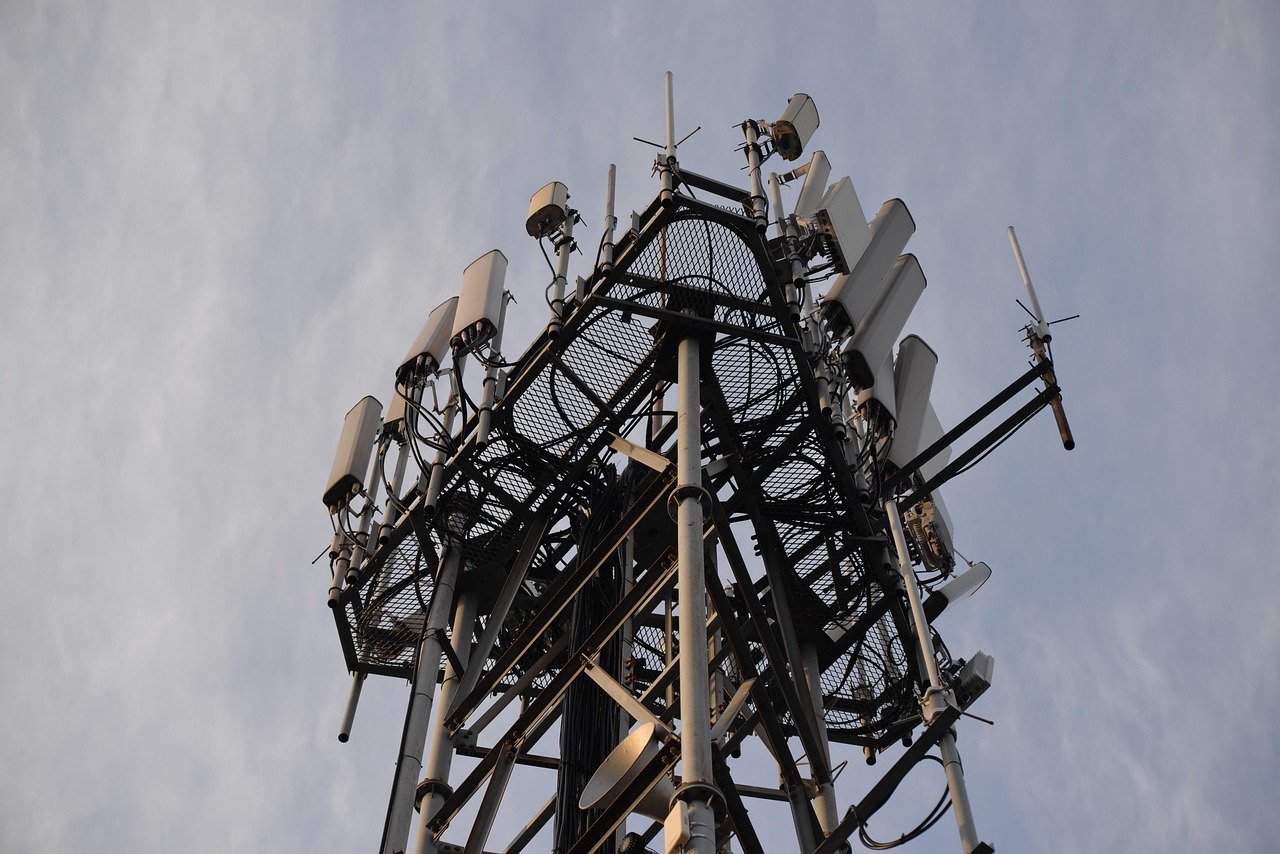
The CLUE-H cluster, the European research network that connects ETAIN with GOLIAT, NextGEM, and SEAWave, has published its second policy brief. Together, these projects investigate the complex relationship between electromagnetic fields (EMF) and human health across the life course, from early development to adulthood, combining exposure science, epidemiology, engineering, and social research.
This new publication takes a closer look at what the rollout of 5G in Europe actually means in terms of human exposure to radiofrequency electromagnetic fields (RF-EMFs). As mobile networks evolve, so do exposure patterns. The brief explains how exposure today is no longer dominated by a single source, but rather emerges from a dynamic combination of environmental signals from base stations (downlink), emissions from our own devices (uplink), and even the activity of people around us.
Importantly, 5G does not simply “add more radiation.” It introduces new technical features, such as massive MIMO antennas and dynamic beamforming, that make exposure more variable in time and space. Instead of a constant background signal, exposure can fluctuate depending on network traffic, user behaviour, and signal quality. In millimetre-wave (FR2) bands, still very limited in Europe, exposure is even more localised and remains confined to superficial tissues.
Across large-scale measurement campaigns conducted in multiple European countries, exposure levels were consistently found to be well below the international safety limits established by the International Commission on Non-Ionizing Radiation Protection (ICNIRP) and the EU Council Recommendation 1999/519/EC. Even in so-called “maximum traffic” scenarios, where researchers intentionally generated high levels of data transmission, exposure remained far under regulatory thresholds.
At the same time, public perception tells a different story. Surveys conducted across ten European countries show that most people believe 5G increases daily RF-EMF exposure compared to 4G or Wi-Fi. Many respondents also assume that video calls on 5G produce higher exposure than previous technologies. Yet measurements indicate that, in many cases, 5G devices operate at lower transmitted power than 4G, particularly when network quality is good.
Another important insight concerns the balance between environmental and personal exposure. In urban areas with strong signal quality, environmental exposure from base stations tends to be higher, but the phone itself transmits at lower power. In contrast, in areas with poor coverage, devices may increase their output power, potentially raising personal exposure. This means that network quality and user behaviour (such as call duration and device distance from the body) play a crucial role in determining overall daily exposure.
One particularly relevant recommendation for the public is the call to consider RF-EMF exposure early in the design of future communication technologies. By integrating exposure optimization into the development phase, rather than addressing it after deployment, engineers and policymakers can ensure that exposure remains as low as reasonably achievable while maintaining performance and connectivity.
The brief also highlights the importance of continuous monitoring, especially as 5G evolves and millimetre-wave deployments expand. Monitoring is not only a scientific necessity, it is also essential for transparent risk communication and public trust. Given the clear gap between measured exposure and perceived exposure, innovative and accessible communication approaches are needed to address misconceptions and support informed public dialogue.
For ETAIN, this policy brief reinforces a central message: understanding exposure in real-world conditions requires both rigorous measurement and attention to societal perception. Evidence-based regulation, technological innovation, and citizen awareness must move forward together.
The full policy brief offers a comprehensive overview of the current state of knowledge and provides guidance for policymakers, researchers, and citizens navigating Europe’s digital transition.
